
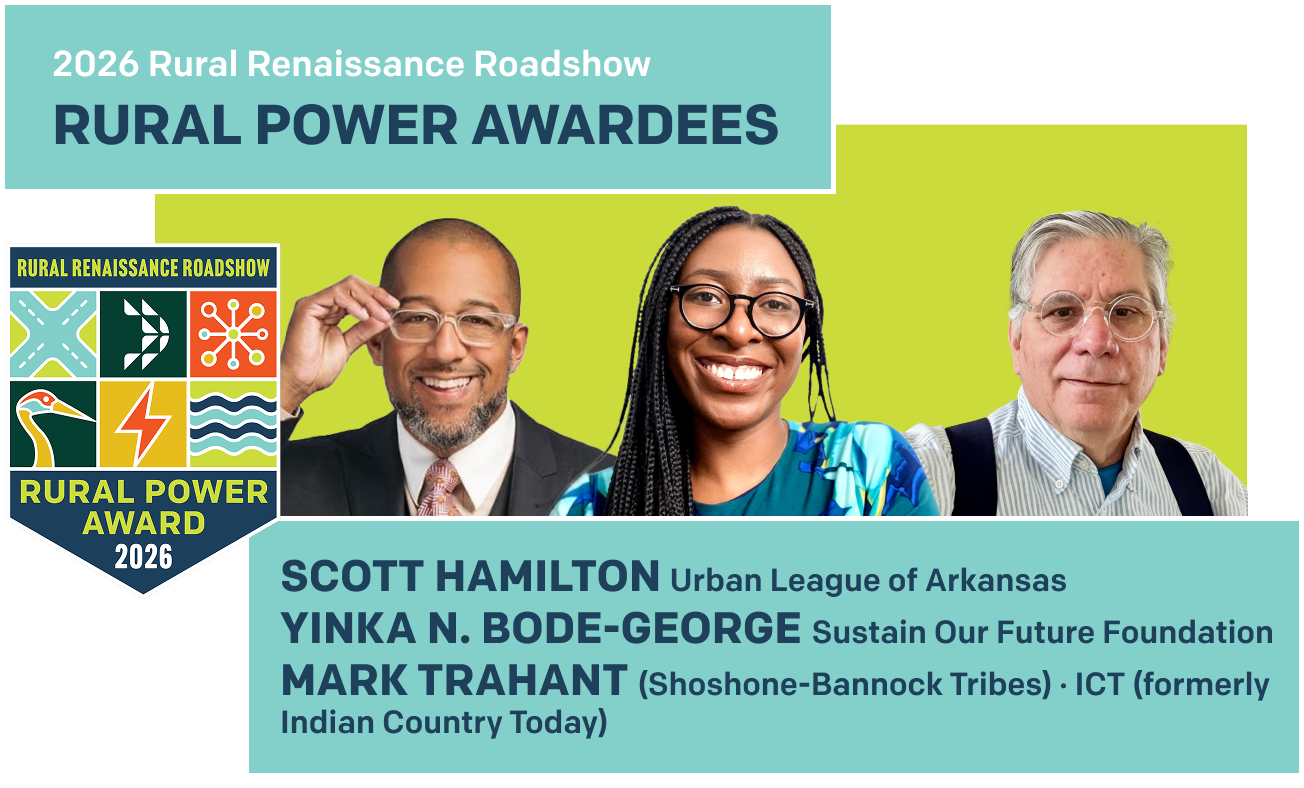
Last week, we introduced our 2026 Rural Power Awardees—Yinka N. Bode-George, Scott Hamilton, and Mark Trahant—three leaders whose work demonstrates what it looks like to help communities build power, strengthen local opportunity, and shape their futures on their own terms.
This week, we’re spotlighting the conversations shaping this year’s Roadshow.
As AI data centers become a kitchen-table issue across rural America, the questions extend far beyond the facilities themselves. What will growing electricity demand mean for household bills and local infrastructure? How should communities plan for water needs? What happens to working lands? Who makes decisions about development? And how can new investment translate into lasting jobs, community benefits, and economic opportunity for the people who already call these places home? These are the interconnected questions at the heart of this year’s Roadshow.
At the 2026 Rural Renaissance Roadshow: At the Data Center Crossroads — Land, Energy, Water, and the Future of Rural Power, we’re bringing together rural and Tribal leaders, utilities, technology companies, farmers, journalists, policymakers, researchers, community organizations, and practitioners to work through those questions together. Across four integrated tracks—Energy, Water, Land, and Economic Development—and a series of hands-on workshops, we’ll move from the big picture to practical conversations about affordability, infrastructure, local control, conservation, stewardship, and shared prosperity.
From mapping the land, water, and energy demands surrounding data-center development to examining rising power bills, sustainable water infrastructure, working lands, community benefit agreements, local permitting, rural workforce development, and resilience, the Roadshow is designed to connect national expertise with the decisions communities are facing right now.
Whether your community is a yes, a no, or a maybe on data centers, the goal is the same: rural communities should have the information, relationships, and tools to make consequential decisions about their future on their own terms.

Meet Your Track Conveners
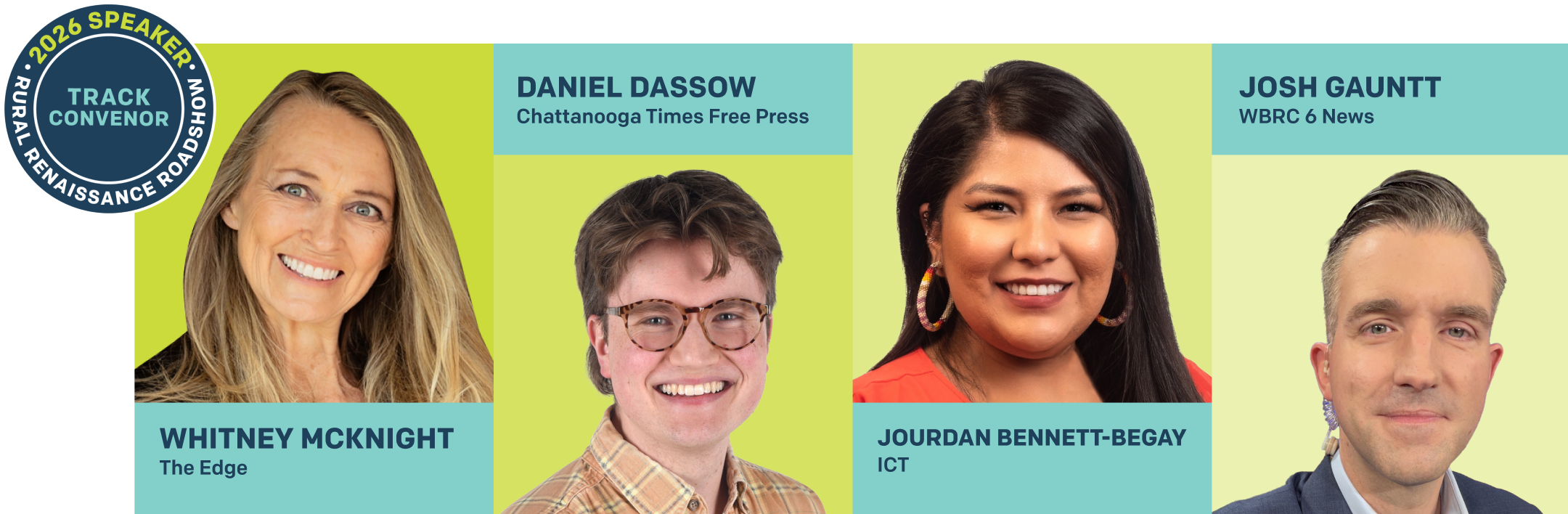
Daniel Dassow
Business Reporter, Chattanooga Times Free Press — Energy Track
Daniel Dassow covers public power and development for the Chattanooga Times Free Press. A former technology and energy reporter at the Knoxville News Sentinel, he brings a journalist’s perspective to the changing energy landscape of the Southeast.
Jourdan Bennett-Begaye (Diné)
Digital News Director, ICT — Water Track
Jourdan Bennett-Begaye, a Navajo Nation citizen, is the digital news director of ICT, formerly Indian Country Today. An award-winning journalist, she covers Indigenous communities, public health, policy, and the issues shaping Tribal Nations.
Whitney McKnight
Publisher, The Edge — Land Track
Whitney McKnight is the founder and publisher of The Edge, a news outlet covering Madison County, Kentucky. Her journalism spans land use, health policy, and healthcare antitrust, bringing a community-focused reporting perspective to rural development.
Josh Gauntt
Anchor and Reporter, WBRC 6 News — Economic Development Track
Josh Gauntt is an Alabama-born journalist and investigative reporter with WBRC 6 News. His reporting covers government accountability, natural disasters, and the growing debate over data center development and its effects on communities.
Energy Track: Power, Affordability, and Resilience
Defining the Energy & Affordability Crisis
As data centers increase electricity demand, utilities face major infrastructure decisions. Who should pay for new capacity, and how can costs be shared fairly? This conversation examines grid planning, rate design, and the stakes for everyday customers.
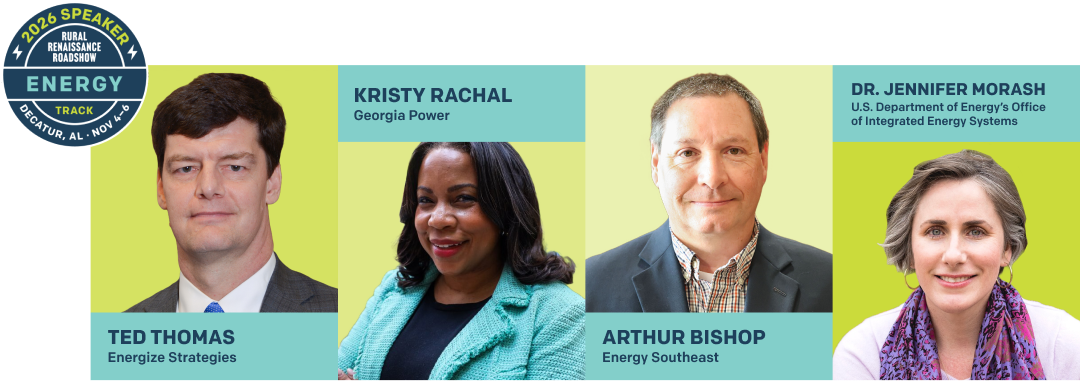
Featured Speaker: Ted Thomas
Founding Partner, Energize Strategies
Ted Thomas is the founding partner of Energize Strategies and former chairman of the Arkansas Public Service Commission. His experience in utility regulation, regional transmission coordination, and grid reliability brings a policy perspective to energy affordability.
Distributed Energy as a Ministry of Resilience: Faith & Energy Leaders in Conversation
Faith communities can be important partners in responding to rising energy costs, extreme weather, and local needs. Faith and energy leaders explore how distributed energy can expand access, strengthen resilience, and support a broader ministry of care.
Featured Speaker: Kristy Rachal
Executive Director of Community Resiliency, Georgia Power
Kristy Rachal leads Georgia Power’s Community Resilience Office, connecting community organizations, philanthropy, contractors, and government partners to improve energy affordability through home repairs, efficiency upgrades, and resilience infrastructure.
Partnering with Local Utilities to Accelerate Resilience
Reliable energy systems depend on strong relationships between utilities and the communities they serve. This session explores how local partnerships can improve infrastructure planning, prepare for disruptions, and develop practical solutions to community energy needs.
Featured Speaker: Arthur Bishop
Vice President of Compliance and Distribution Services, Energy Southeast
Arthur Bishop supports regulatory compliance and electric distribution services for Energy Southeast and its members. With more than 25 years in municipal electric utilities, he brings experience in power systems, transmission, and local utility operations.
Growing Food and Clean Power: How Farm-Friendly Solar Helps Farmers, Neighbors, and Energy
Can agricultural land produce food and clean power together? This session explores farm-friendly solar, including approaches that maintain agricultural productivity while creating energy opportunities and potential benefits for farmers and neighboring communities.
Featured Speaker: Dr. Jennifer Morash
Sustainability Scientist and AAAS Science & Technology Policy Fellow, U.S. Department of Energy
Dr. Jennifer Morash studies the intersection of agriculture, energy, and public policy. An agrivoltaics specialist and AAAS Science & Technology Policy Fellow, she has researched barriers to farm-friendly solar and worked on project development and stakeholder engagement.
Water Track: Stewardship, Infrastructure, and Community Resilience
Under Pressure: Water Use and Reuse in Data Centers
As data centers expand, communities are asking how new facilities may affect local water supplies. This session examines water use, reuse, conservation, and planning strategies that can help communities weigh infrastructure proposals against long-term resource needs.
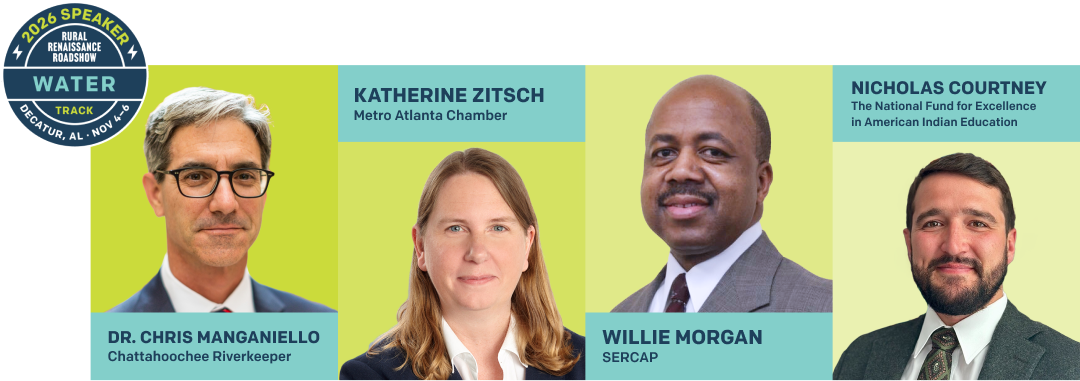
Featured Speaker: Dr. Chris Manganiello
Water Policy Director, Chattahoochee Riverkeeper
Dr. Chris Manganiello leads water supply policy and regional planning work at Chattahoochee Riverkeeper. A historian and author of Southern Water, Southern Power, he brings expertise in the connections between water resources, energy, and public policy.
The Big Picture: Planning Strategies for Sustainable Water Infrastructure
Strong water systems are essential to rural health and economic opportunity. This session examines how long-term planning, regional partnerships, and coordinated investment can help communities address infrastructure needs and protect reliable access to water.
Featured Speaker: Katherine Zitsch
Director of Water Strategy, Metro Atlanta Chamber
Katherine Zitsch leads a collaborative initiative addressing Georgia’s water challenges through 2050 and beyond. A professional engineer with more than 25 years of experience, she focuses on planning across interconnected water, energy, and agricultural systems.
From Preparedness to Recovery: Planning for Rural Flood Resilience
Rural communities face distinct challenges before, during, and after floods. This session explores how risk assessment, infrastructure planning, and community partnerships can strengthen preparedness, support recovery, and protect people and essential services.
Featured Speaker: Willie Morgan
Deputy Director of Regional Programs, Southeast Rural Community Assistance Project
Willie Morgan is a licensed professional engineer with decades of experience in utility regulation and environmental compliance. At SERCAP, he helps advance programs supporting rural communities and brings expertise spanning water, wastewater, electric, and gas utilities.
Water Is Life: Indigenous Perspectives on Water Stewardship, AI Infrastructure, and the Future of Rural Communities
Water is central to Indigenous communities, cultures, and futures. This conversation explores Tribal perspectives on stewardship and emerging infrastructure, including AI and data centers, and why Indigenous knowledge and priorities matter in water decisions.
Featured Speaker: Nicholas Courtney (Makah)
Program Director, National Fund for Excellence in American Indian Education
Nicholas Courtney is a Makah citizen whose work spans Tribal sovereignty, infrastructure, education, and economic development. A former National Congress of American Indians policy director, he supports community-driven investment and Tribal self-determination.
Land Track: Local Control, Working Lands, and Stewardship
Working Lands: Rural Land Use and the Future of Agriculture
Rural land supports livelihoods, local economies, and community identity. This session explores how agricultural innovation, land-use decisions, and economic pressures are shaping working farms—and how communities can balance productivity with long-term stewardship.
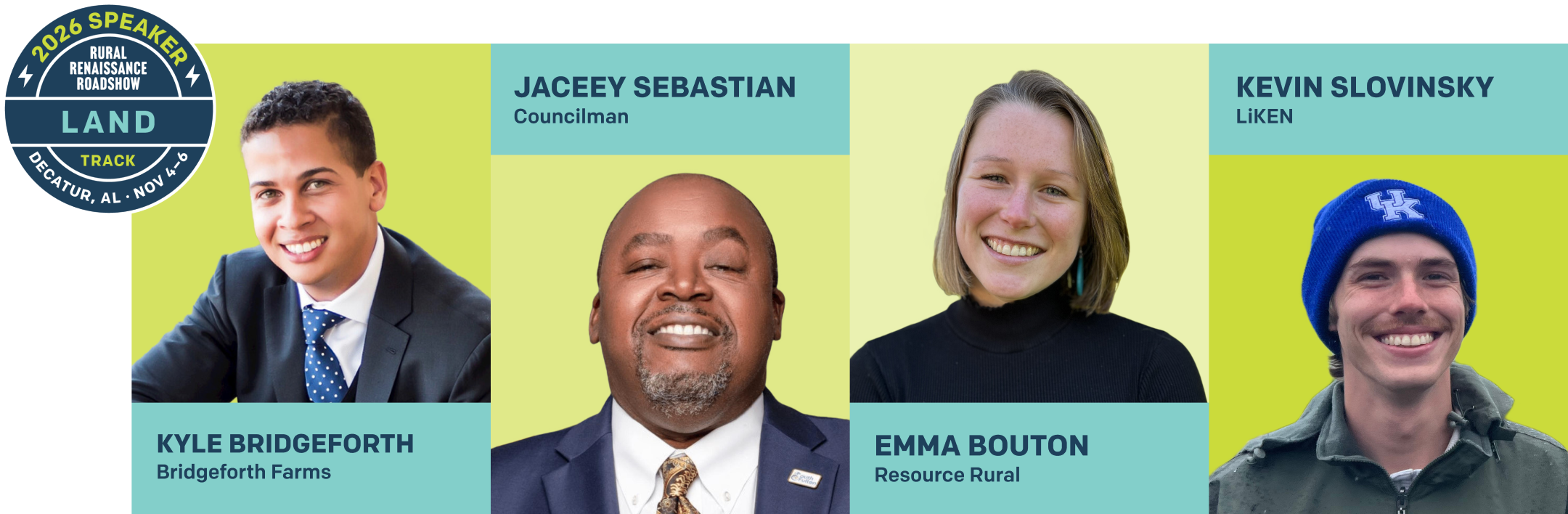
Featured Speaker: Kyle Bridgeforth
Owner and Operating Partner, Bridgeforth Farms
Kyle Bridgeforth helps lead his family’s fifth-generation farming business in Tanner, Alabama, focusing on crop traceability, efficiency, and business development. He also works with rural leaders on how data center growth intersects with land, water, and power.
Local Control: Practical Tools & Model Policies
How can communities shape development before decisions are made? This session explores local policies, public engagement, and practical planning tools that can help rural leaders protect community priorities while considering new investment and land-use proposals.
Featured Speaker: Jaceey Sebastian
Councilman, City of South Fulton, Georgia, District 4
Jaceey Sebastian is a South Fulton councilmember with experience in strategic planning, research, and community development. He helped develop a community-owned resilience hub in Atlanta and brings a local-government perspective to community-led decision-making.
Rural Organizing Strategies for Self-Determination in Data Center Development
Data center proposals can bring consequential choices about land, infrastructure, and local priorities. This session examines how rural residents can organize, participate in public decisions, and advocate for outcomes that reflect their communities’ long-term goals.
Featured Speaker: Emma Bouton
Advocacy and Organizing Director, Resource Rural
Emma Bouton supports rural organizing around decisions affecting local economies, infrastructure, energy, and the environment. Her background includes community campaigns and policy coalitions focused on clean energy, housing, and workforce development.
Ending Land Loss: Strategies for Restoring Heirs Property Rights
Unclear ownership of inherited land can put family property and generational wealth at risk. This session explores legal, financial, and community-based approaches to resolving heirs property challenges and helping rural families retain and use their land.
Featured Speaker: Kevin Slovinsky
Director, Land & Revenues Program, LiKEN Knowledge
Kevin Slovinsky directs LiKEN Knowledge’s Land & Revenues Program, which includes the Appalachian Heirs’ Property Center. His work supports families navigating property title issues and develops practical approaches to addressing land insecurity and inequality.
Economic Development Track: Community Benefits, Culture, and Opportunity
Turning Community Insight into Rural Resilience
Effective rural development starts with understanding local needs. This session explores how community engagement, research, and collaborative planning can turn residents’ experiences into practical strategies for resilience, investment, and long-term economic opportunity.
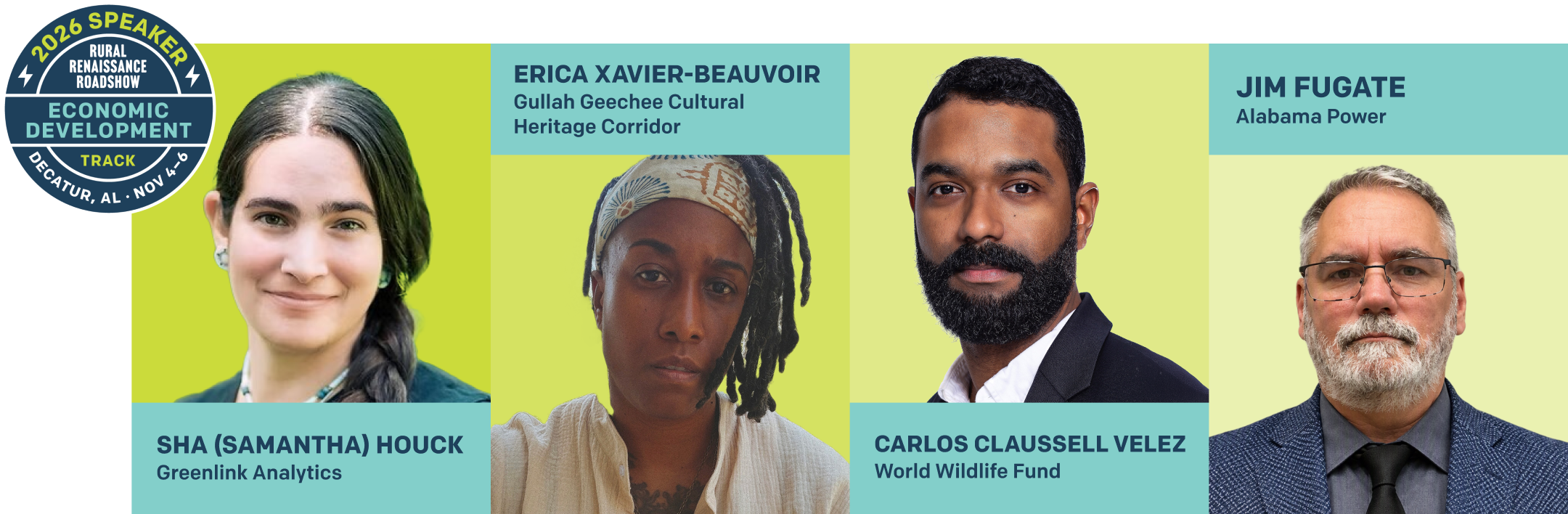
Featured Speaker: Sha (Samantha) Houck
Director of Community Initiatives, Greenlink Analytics
Sha Houck brings a people-first approach to community initiatives at Greenlink Analytics. Their background spans research, environmental policy, and geographic information systems, with experience connecting community knowledge to planning and decision-making.
Cultural Preservation as a Resource for Resilience: The Gullah Geechee Case
Cultural heritage can be a source of strength in the face of environmental and economic change. Using the Gullah Geechee Cultural Heritage Corridor as a case study, this session explores how preservation and community-led planning can support resilience.
Featured Speaker: Erica Xavier-Beauvoir
Resiliency Manager, Gullah Geechee Cultural Heritage Corridor NHA
Erica Xavier-Beauvoir developed a four-state resilience plan for the Gullah Geechee Cultural Heritage Corridor. Their work brings together climate data, ancestral knowledge, and community testimony to address environmental threats and cultural displacement.
Community Benefits that Matter: Designing Agreements for Long-Term Value
Major investments raise a fundamental question: what lasting value reaches local residents? This session explores how community benefit strategies can connect development with workforce opportunities, shared prosperity, and commitments shaped by community priorities.
Featured Speaker: Carlos Claussell Velez
Manager, Climate, Community Benefits, & Social Impact, World Wildlife Fund
Carlos Claussell Velez leads work at World Wildlife Fund connecting corporate climate strategies with community and workforce benefits. He has developed community benefit initiatives and partnerships focused on making clean energy investment more inclusive.
Dignity & Work: Building Opportunity in the Age of AI
AI and new infrastructure are changing the skills employers need. This session explores how training, education, and industry partnerships can help rural workers access emerging careers while supporting economic mobility and opportunity close to home.
Featured Speaker: Jim Fugate
Energy Infrastructure Training Manager, Alabama Power
Jim Fugate develops energy infrastructure training at Alabama Power, working with Alabama’s community colleges and career technical education centers. His programs connect workers with skills in HVACR, solar, microgrids, and other energy technologies.
Beyond the Tracks: Practical Workshops for Rural Leaders
The Cost of Power: Utility and Data Center Perspectives on Rising Energy Bills
Who pays when electricity demand and infrastructure investment rise? Utility, industry, and policy perspectives come together to examine energy bills, large power users, and approaches to balancing system expansion with affordability for homes and businesses.
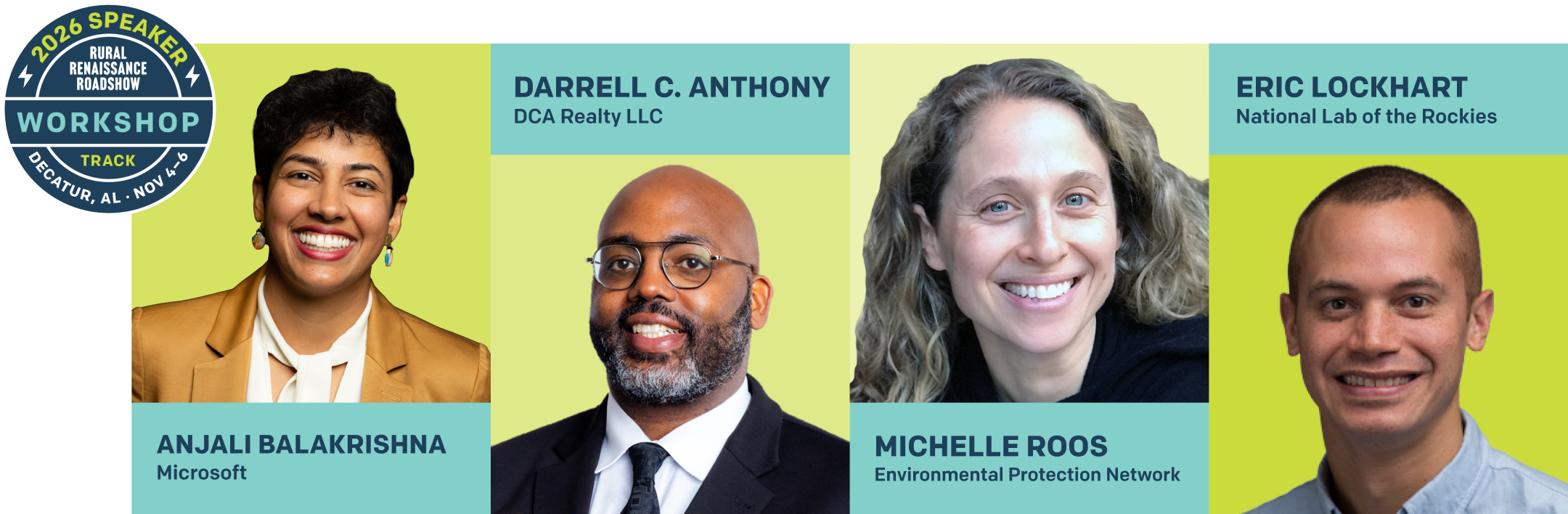
Featured Speaker: Anjali Balakrishna
Global Community Energy Program Lead, Microsoft
Anjali Balakrishna leads Microsoft’s global Community Energy program, connecting clean energy procurement with community benefits. With more than 12 years of experience, she develops partnerships focused on sustainability, affordability, and economic inclusion.
Best Practices from the Field: SOUL Partners in Their Own Words
What does community-centered energy work look like on the ground? Partners in Groundswell’s Save on Utilities Long-Term (SOUL) initiative share practical lessons in housing, energy affordability, local partnerships, and lasting community investment.
Featured Speaker: Darrell C. Anthony
Owner and Principal Broker, DCA Realty LLC
Darrell C. Anthony is an Arkansas Delta real estate broker, builder, and community leader. His work connects housing development, energy efficiency, and economic opportunity, bringing firsthand insight into the needs of small towns and underserved communities.
The Permit Matrix: How Communities Can Use the Approval Process to Make Data Centers Work for Them
Data center proposals involve permits, reviews, and decisions that can create opportunities for community input. This workshop introduces a practical framework for understanding approval processes and identifying ways to shape development outcomes.
Featured Speaker: Michelle Roos
Executive Director, Environmental Protection Network
Michelle Roos leads the Environmental Protection Network, which connects former EPA professionals with communities seeking technical assistance. She brings more than 25 years of experience in environmental protection, organizing, and community capacity-building.
From the Ground Up: Energy Planning Tools for Rural Communities
Rural leaders need clear information to make decisions about energy investment. This workshop explores planning tools, research, and technical assistance that can help communities evaluate options and advance affordable, reliable energy solutions.
Featured Speaker: Eric Lockhart
Group Manager, National Laboratory of the Rockies
Eric Lockhart leads an integrated energy research group at the National Laboratory of the Rockies. His work applies energy analysis and technology research to real-world decisions, including modeling adoption trends and examining energy affordability.
Bring Your Experience to the Conversation
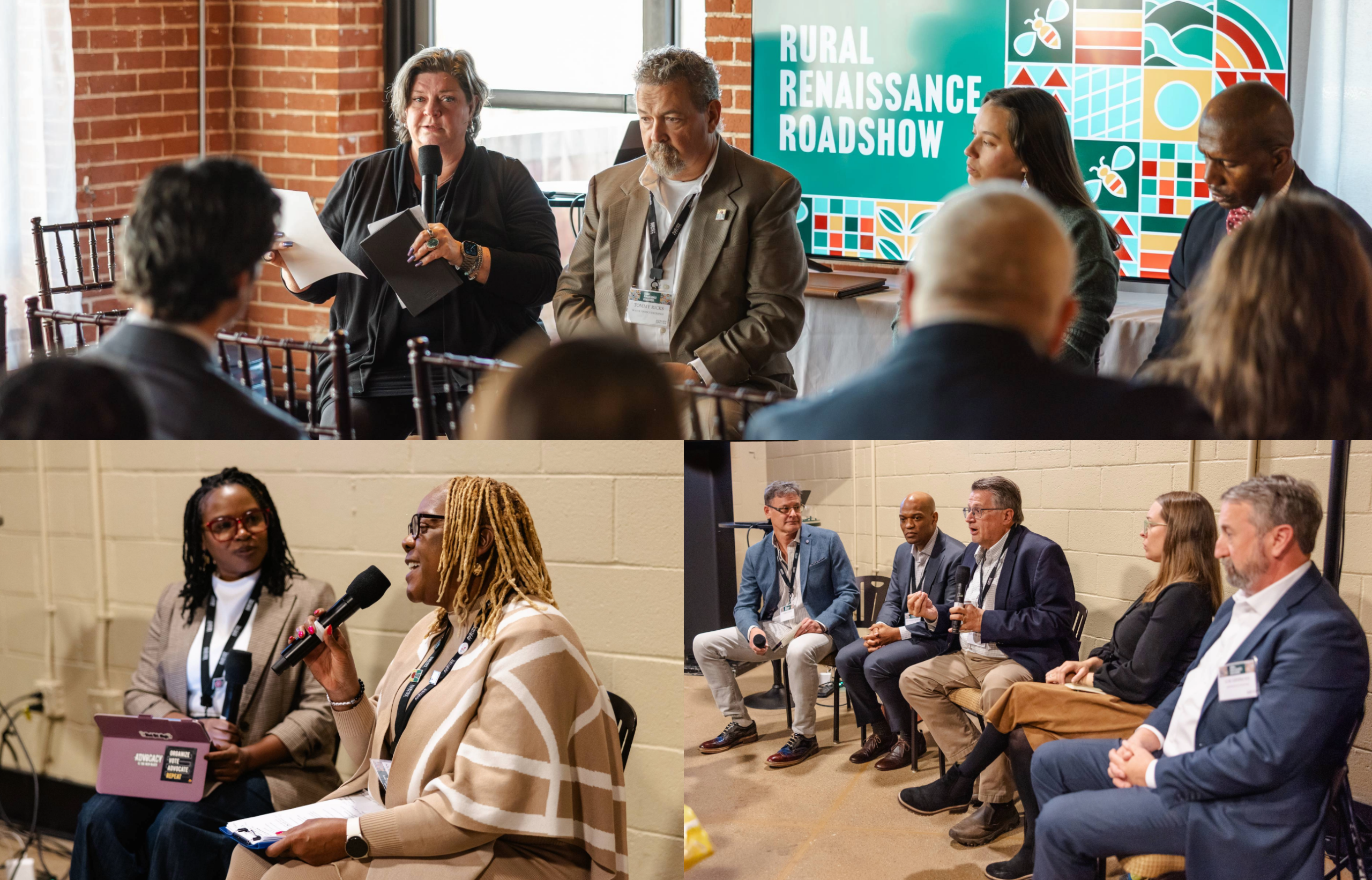
If you are a local elected official, utility or energy leader, economic development professional, community leader, landowner, or someone helping shape the future of rural communities, the Rural Renaissance Roadshow is an opportunity to connect with peers and explore how communities are navigating growth, infrastructure, affordability, resilience, and local economic opportunity.
The Roadshow brings together leaders and practitioners with different perspectives to share experience, build relationships, and better understand the choices rural communities face at the Data Center Crossroads. We hope you’ll join the conversation and bring your own experience, questions, and perspective to the table.
November 4–6, 2026
Cook Museum of Natural Science
Decatur, Alabama
