
September 4, 2025 (Atlanta GA) – Today, four Southwest Atlanta Churches – West Hunter Street Baptist, Providence Missionary Baptist, Community Church Atlanta and the Vicars Community Center, and Atlanta Good Shepherd Community Church – announce the launch of the Westside Resilience Corridor to strengthen community resilience in Westside Atlanta by aligning their ministries and partnering with Groundswell, with support from Georgia Power, the Georgia Environmental Finance Authority (GEFA), and the City of Atlanta to increase energy efficiency, enhance housing quality, expand energy affordability, implement workforce development and build additional resilience hubs at Corridor churches with solar + storage infrastructure. Residents of Southwest Atlanta, where the Westside Resilience Corridor is located, dedicate more of their income to energy costs than anywhere else in the city, according to Georgia Tech research. Notably, higher power bills can result from aging housing due to need of weatherization improvements and structural repairs. Before the end of this year, the partners will:
- Enroll and complete energy efficiency improvements and necessary repairs on 50 homes with income-qualified residents- reducing energy costs, improving affordability, and preserving housing for Westside residents.
- Prepare to implement energy efficiency improvements on each of the four Westside Resilience Corridor churches, leading by example and enabling more money for the mission.
- Complete the design for a second resilience hub, combining solar and energy storage to increase resident access to energy in extreme weather and outages, and lower energy costs for an anchor institution in the West End.
- Launch an energy workforce training program in partnership with Georgia Power, hosted at Community Church Atlanta’s Vicars Community Center, the site of the first community-owned resilience hub in Atlanta, linking local residents to careers and craft trades in the energy industry.
“During my long career in ministry, environmental science, and public health, I have longed to see this kind of coalition of churches come together to focus on the comprehensive well-being of our communities,” remarked Pastor Richard S. Bright, Pastor Emeritus of Atlanta Good Shepherd Community Church, also a veteran environmental health scientist and advocate.
”This is what real ministry looks like, and I am honored to carry forward this legacy of servant leadership in this community,” said newly installed pastor of Atlanta Good Shepherd Community Church, Rev. Dr. Kenneth Hill.
“The churches that have come together to launch the Westside Resilience Corridor represent ministry at its best beyond the church walls,” commented Matthew Wesley Williams, SVP of Community Development with Groundswell and former pastor and seminary president. “Access to critical resources and infrastructure, connection to community, and participatory local decision-making are central to how Groundswell approaches resilience, and the Westside Resilience Corridor embodies this joyful work.”
The vision for the Westside Resilience Corridor emerged from local pastoral leadership and from each church’s longstanding ministry in the community, and it is built around four pillars: housing affordability, efficiency, and quality; workforce and economic development; food systems and security; and comprehensive health and wellness. True to its founding pillars, the collaborative work of the Westside Resilience Corridor and its partners will be data-driven with community-based data development as a priority, focused on root causes not symptoms, and will take the long view with a 25+ year trajectory.
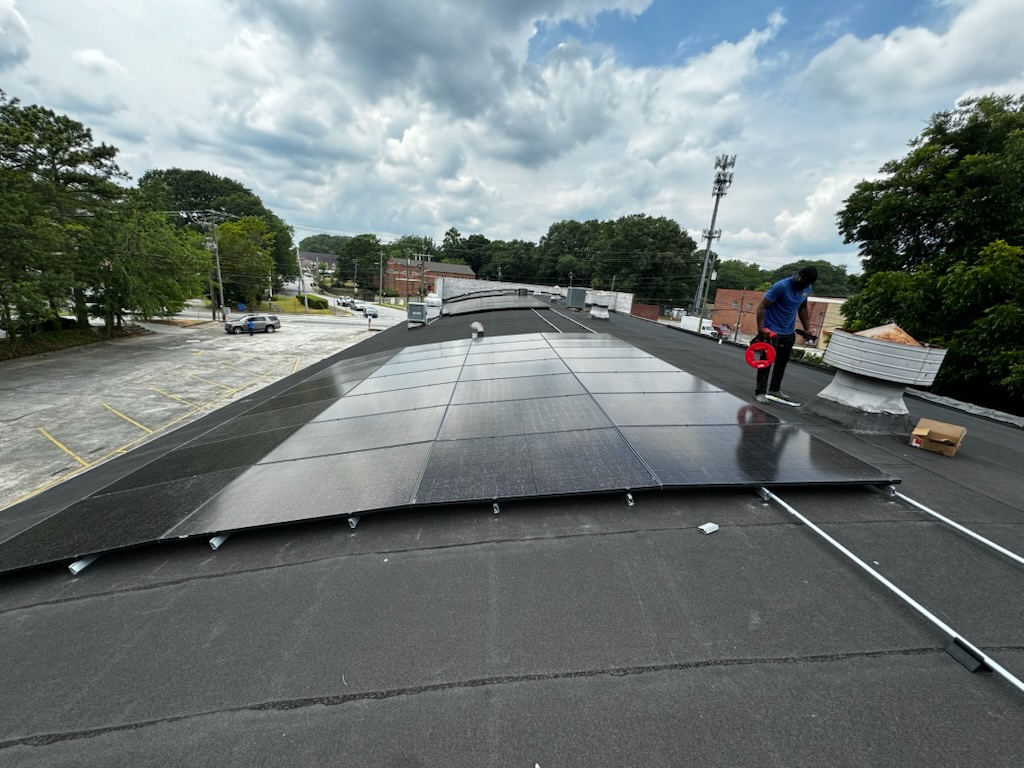
Organizing as the Westside Resilience Corridor was ignited by the construction of the Vicars Community Center resilience hub at Community Church Atlanta. Combining solar and energy storage to keep the lights on when the power goes off to build local resilience, the project was developed by Groundswell to serve and enhance the mission of the community center, which is part of the Community Church Atlanta. Completed last year, the project emerged from the 2020-2021 “Breaking Barriers” study led by Groundswell, inspired by City of Atlanta Chief Sustainability Officer Chandra Farley, in partnership with the Atlanta University Center and including Georgia Power as a contributor to the research.
“While we were proud to be the first resilience hub of its kind in Atlanta, we are thrilled that Vicars won’t be the last. Community Church Atlanta is excited to join forces with similarly committed churches to care for our neighbors in Southwest Atlanta,” commented Pastor Kevin Earley of Community Church Atlanta.
“Strengthening the resilience of community assets like our houses of worship and reducing high energy burdens of legacy residents honors the history and culture of Atlanta’s Westside,” commented Farley. “The City of Atlanta is committed to supporting the Westside Resilience Corridor. This groundbreaking partnership will build on the success of our WeatheRISE ATL energy burden reduction program and support emergency response coordination during extreme weather events.”
In support of the Westside Resilience Corridor’s efforts to enhance community resilience, Groundswell, Georgia Power, GEFA, and the City of Atlanta are aligning and coordinating their energy efficiency programs to serve more people, increase impact, and deliver more savings.
“GEFA looks forward to partnering with Georgia Power, Groundswell, the City of Atlanta, and the four Westside churches to help residents reduce their energy bills and improve their homes. Public-private partnerships like these are a great example of leveraging state, local, and private resources, with the faith-based community to deliver improvements to the lives of Georgians,” added Hunter Hill, Executive Director of the Georgia Environmental Finance Authority (GEFA), whose statewide Home Efficiency Rebate and Home Electrification and Appliance Rebate programs will be woven into the Westside Resilience Corridor initiative.
Georgia Power’s existing energy efficiency and solar programs are aligning with the partnership, optimizing the energy savings opportunities for residents while making every dollar each partner deploys go further. Latanza Adjei, Senior Vice President and Chief Customer Officer of Georgia Power, said, “Every day we help our customers manage their energy use by administering a comprehensive slate of residential and commercial energy efficiency programs. This partnership will help us identify and enable those in less efficient homes to make the improvements needed to reduce their energy consumption. We appreciate the unique role faith organizations play in helping this same community to thrive. That’s why we are excited about this initiative, which will help us connect with Atlanta neighborhoods in a new way, engaging and informing residents about our programs, and demonstrating what can be possible when we come together with intention and purpose.”
Leaky roofs, mold, and wood rot often stand in the way of implementing efficiency measures — like insulation, weatherization, and new HVAC equipment — and energy efficiency funding typically can’t be used for enabling repairs. Additional grant-funded support from a recent Google donation through Georgia Power, and a donation from the Arthur M. Blank Family Foundation through Groundswell will be used to pay for repairs necessary prior to weatherizing a home.
To expand access to energy resilience, Groundswell is developing a second resilience hub combining solar and storage at West Hunter Street Baptist, the next in a pipeline of anticipated resilience hub projects with Corridor churches. “Community care and justice for the most vulnerable among us are at the core of West Hunter’s mission and legacy. We see this resilience hub as an expression of our calling to this community,” explained Rev. Dr. Cedrick Von Jackson.
To keep people at the center of the program consistent with its values, Groundswell will be working to apply the community-centered design process developed through a multi-year US Department of Energy Grant, working with the National Renewable Energy Laboratory (NREL). As a part of the process, local residents will be directly involved in defining how the resilience hub will serve residents during an outage.
Honoring the connection between energy and economic development, Georgia Power will work with the Vicars Community Center of the Community Church Atlanta to recruit for a training program aimed at engaging area residents and preparing them for careers and craft trades in energy through innovative programs such as the Georgia Power Lineworker Entry Program. “As Atlanta’s first resilience hub, it’s the ideal place to host an energy workforce training program, linking our founding to our future. We want to see more of the people building and sustaining our energy system that serves Atlanta’s Westside coming from Atlanta’s Westside,” added Jaceey Sebastian, Trustee and Chair of the Finance Committee of the Community Church Atlanta.
Each of the churches in the Westside Resilience Corridor will serve as a hub for sharing information and helping local residents sign up for energy efficiency.
To learn more, including how to sign up for pre-screening for Westside Atlanta residents, visit https://groundswell.org/westside-resilience-corridor/.